
‘12 million’ stateless people globally, warns UNHCR chief in call to States for decisive action
14>12 November 2018
Human Rights
An estimated 12 million people may be victims of statelessness the impact of which is “immediate and can be dire”, the UN refugee agency (UNHCR) said on Tuesday.
Echoing that message, UNHCR chief Filippo Grandi appealed for “decisive action” from governments to eliminate the problem, noting that it is the right thing to do, “humanly, ethically and politically”.
Every person on this planet has the right to nationality and the right to say I belong – Filippo Grandi, UNHCR chief
Stateless people “still face huge barriers to exercising fundamental human rights”, such as education, medical care or legal employment, the High Commissioner said, before calling for States to tackle discrimination in nationality laws, which is regarded as the biggest driver of the problem.
Only 25 countries around the world retain gender discrimination in their legislation that prevents mothers from conferring their nationality to their children on an equal basis as men.
Madagascar and Sierra Leone are the most recent countries to change these laws, UNHCR said.
Mr Grandi’s appeal comes four years after the launch of a 10-year campaign to eradicate statelessness globally, in recognition that millions remain stateless and living in limbo around the world, with the majority in Asia and Africa.
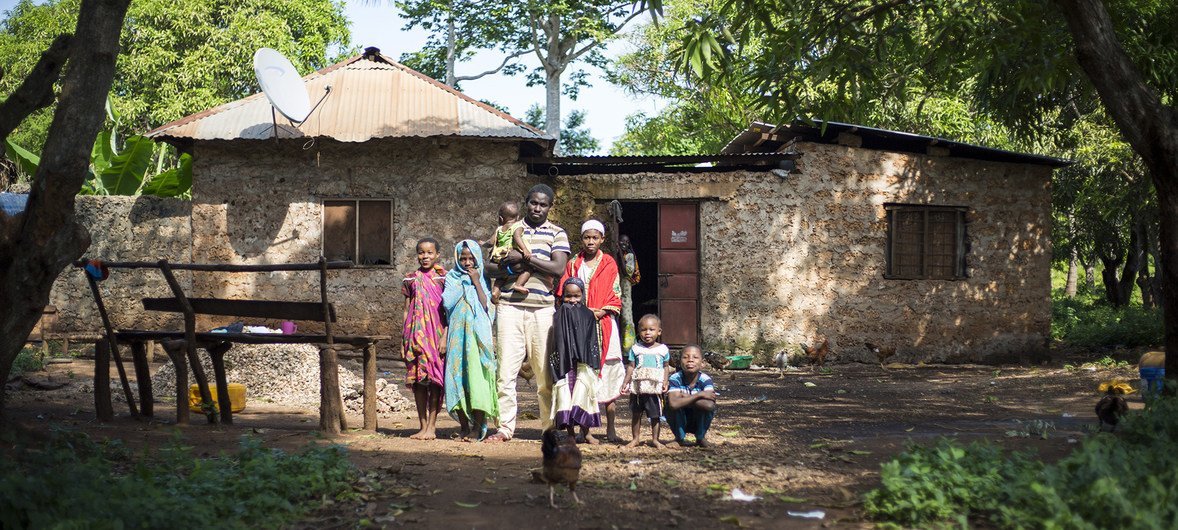
© UNHCR/Roger ArnoldKombo Asumani Kombu and his family, attended a UNHCR workshop in Shimoni, Kenya to share their experience of statelessness. (June 2017)
“Today I call on politicians, governments and legislators around the world to act now, to take and support decisive action to eliminate statelessness globally by 2024,” said UN High Commissioner for Refugees Filippo Grandi. “Humanly, ethically and politically it is the right thing to do. Every person on this planet has the right to nationality and the right to say I BELONG.”
Some countries have hundreds of thousands of stateless persons and there is no region of the world that is untouched by statelessness, UNHCR said.
The very nature of statelessness means it is difficult to determine exactly how many people are affected, or at risk.
In 2017, approximately 70 countries reported 3.9 million stateless individuals. But UNHCR estimates that this is only a fraction of the total and the true number could be three times higher.
There has been progress since UNHCR’s #IBelong campaign began, however, with more than 166,000 formerly stateless people now with a nationality.
In addition, 20 states have acceded to international accords on statelessness since November 2014, bringing the total number of parties to the 1954 Convention to 91 and 73 to the 1961 Convention.
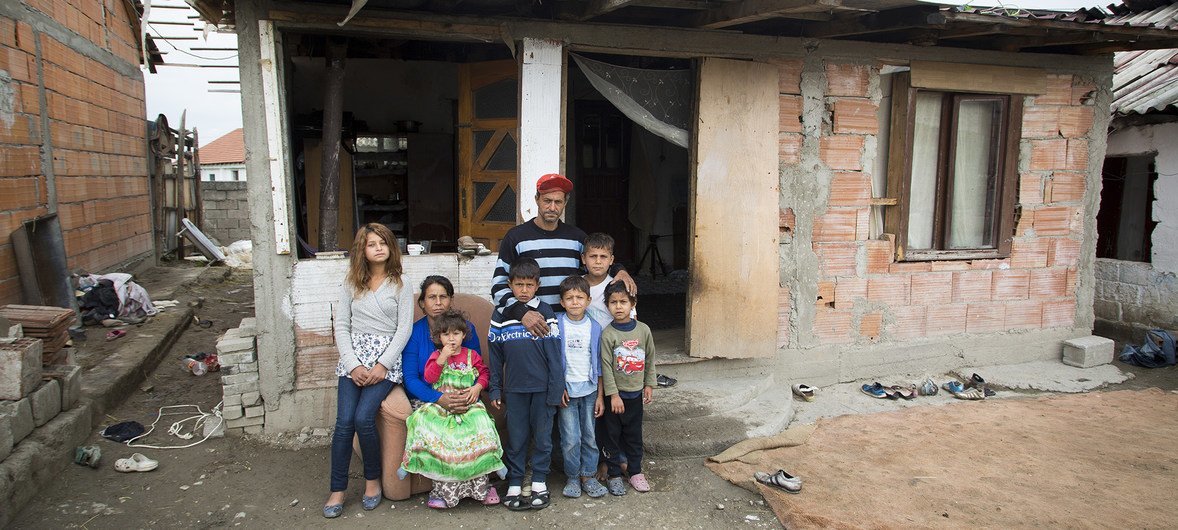
© UNHCR/Roger ArnoldA family poses for a portrait at home after attending a UNHCR stateless workshop in Skopje, Macedonia. Most stateless persons in the former Yugoslav Republic of Macedonia originate from other former Yugoslav republics. 2017.
Nine states have established or improved statelessness determination procedures, six states have reformed their nationality laws and another two have eliminated gender discrimination that prevents women from passing on their nationality to their children.
National plans to end statelessness have also been formally adopted in nine countries.
“States like Kenya, Kyrgyzstan and Thailand are paving the way,” Mr Grandi said, “showing that with political will and commitment, and concerted national efforts, the lives of tens of thousands of people can be transformed through the acquisition of nationality.”
Insisting that statelessness is a man-made problem and “relatively easy to resolve and prevent”, UNHCR has published a handbook called “Good Practices in Nationality Laws for the Prevention and Reduction of Statelessness” which offers examples of legislation that States can use to avoid childhood statelessness, eliminate gender discrimination from nationality laws and establish procedures to identify stateless persons and facilitate their naturalization.
Quelle/unnews


02/15/2019 at 09:39
Everyone needs their place on Earth. Communities with rights and duties, because it’s easier to live. I feel sorry for what they do not have.
LikeLiked by 2 people
02/15/2019 at 12:24
Everyone needs their place on earth. Communities with rights and duties, good times like simple times, who eat all without exception eat the same food in other form, we drink the same we breathe even before our birth like, God has it wonders without limitation, because it is easier to live is. I am more than convinced the dear god, has reason why that is so, who must open up on the earth, I am very sorry, because of their life conditions what they do not have. but they warm hearted who they are poor or not. Many Thanks
LikeLiked by 1 person
02/15/2019 at 12:27
Best regards and have a nice day. let’s enjoy eyes with what God has created.
LikeLike
02/15/2019 at 12:43
Best regards back and have a wonderful day. wish you great weekend !!!!!
LikeLiked by 1 person
02/15/2019 at 13:00
Thank you. Each other.
LikeLike
02/15/2019 at 13:34
Thanks a lot!!!!!!!!(*L*)<<
LikeLike
02/15/2019 at 16:56
🙂
LikeLike
02/15/2019 at 17:20
🙂
LikeLiked by 1 person